‘A great feeling of strangeness & unlikeness to Christmas’: Queen Victoria’s Christmas 1896
1896 had been a traumatic year for Queen Victoria. Not only was it ‘the 35th anniversary of that dreadful day which crushed my life!’1, but she also watched ‘the terrible sorrow that has befallen my poor darling child [Princess Beatrice] & made her a widow too.’2 While Queen Victoria had initially been reluctant for Beatrice to marry, she soon fell in love with her newest son-in-law, Prince Henry of Battenberg, who lived with the Queen during his decade long marriage to Beatrice. It was said that the love between Beatrice and Henry had been a true love match, with some courtiers claiming that their love had been similar, if not stronger, than that of Victoria and Albert. Whether this was the case or not, the young couple’s happiness radiated amongst the Queen’s previously mournful court.

However, Prince Henry soon found himself feeling suffocated by the Queen’s restrictions and in 1895 begged his mother-in-law to allow him to join the Anglo-Ashanti war. Victoria had been reluctant to agree but she had always had a soft spot for Henry and wanted to show gratitude for his loyalty to her and her daughter. However, while he was away, the Prince contracted malaria and tragically passed away in January 1896. Beatrice instantly fell into a deep state of mourning and was almost completely inconsolable, just as her mother had been after Albert’s death in 1861. As would be expected, the loss of Henry overshadowed much of 1896, including the festive period.
While the Queen spent the first half of December at Windsor Castle, where Prince Albert had passed 35 years earlier, on 18th December Victoria, Beatrice and her household travelled to Osborne House on the Isle of Wight, where they were to spend the rest of the festive season. The joy of their arrival in the early afternoon was bittersweet due to the ‘sad memories’3 that filled the empty Italianate structure. ‘This time of the year brings everything back so forcibly’4 Victoria confided in her journal as she began writing Christmas cards and preparing gifts before the rest of her family travelled south.
Unlike former happy years, Victoria entered Christmas Eve 1896 ‘with a sad heart & a great feeling of strangeness & unlikeness to Christmas’.5 The day itself was ‘bright & fine’6, as the heavy mist from previous days had finally cleared. When the Queen returned from her morning drive around the grounds with Beatrice, her seventh child – Prince Arthur, Duke of Connaught – arrived with his wife and their three children. Once they had been welcomed, the Queen handed out her gifts to the members of her household before going out on yet another outing.

In the years following Albert’s death Victoria had made a habit of spending Christmas at Osborne and while the celebrations were somewhat smaller than they had been during his lifetime, she continued many of their joint traditions, including that of displaying everyone’s gifts on tables with decorated trees. At Osborne this tradition usually took place in the Dining Room, but in 1896 Victoria decided to move the spectacle into the large, exotic Durbar Room, which is on the ground floor of the new Durbar Wing, built in 1891, and located directly below Beatrice and Henry’s private apartments. Victoria described the display of gifts as looking ‘very pretty’7, adding that she received ‘many pretty presents, amongst which, from Bertie, a silver statuette of his horse Persimmon, which won the Derby.’8 In her journal Victoria particularly notes the absence of Prince Henry, who had also been absent the previous year due to being abroad. However, this year was different and it was the first Christmas where the family knew he would never be returning.
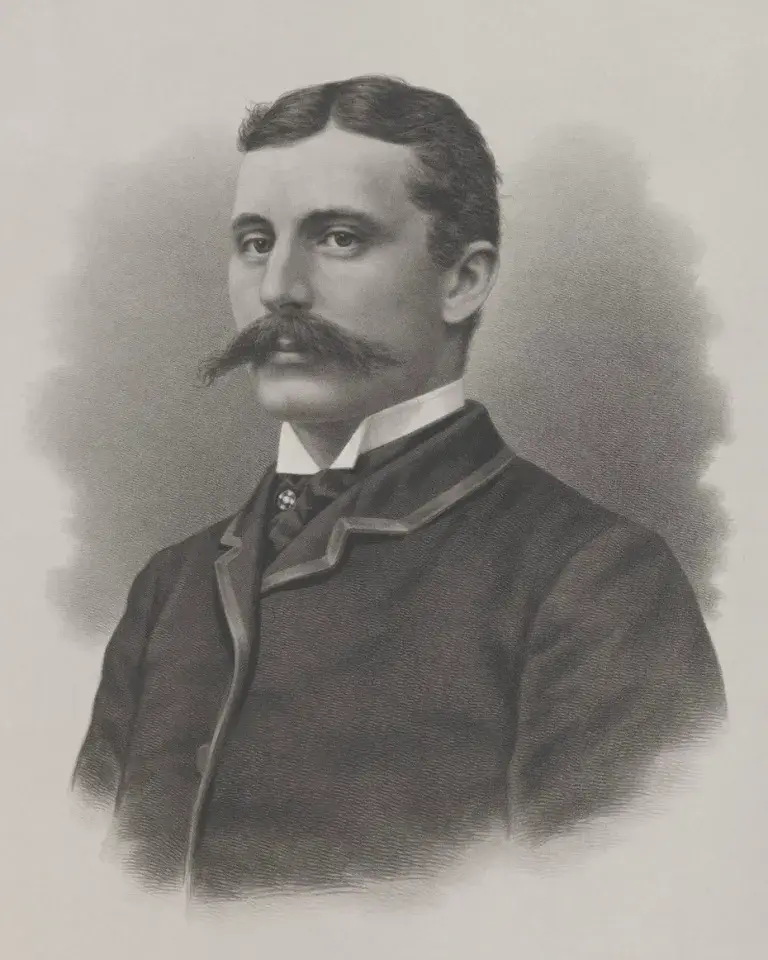
Christmas Day was filled with just as much sorrow. The day was once again bright and the family began by exchanging cards, a tradition which was in full flow by the late 1800s. A small service was held at the house before Victoria, Beatrice and Princess Louise Margaret of Connaught (Arthur’s wife) travelled to St Mildred’s Church in the nearby village of Whippingham. It was at this church that the Queen and Prince Albert would often attend their Sunday services and it was also here that Beatrice and Henry married in July 1885. As the island and the church had played such a prominent role in Henry’s married life (he was also Governor of the Island), it was decided that his body would be laid to rest in the newly named ‘Battenberg Chapel’ near the church’s altar. Upon arriving at the church on this mournful Christmas, Henrys widow, mother-in-law and sister-in-law each placed flowers and wreaths of holly near his marble tomb, in which Beatrice was also laid to rest following her death in 1944. The royal visit was naturally one of grief but the Queen writes that the sadness was also accompanied by a sense of peace. After returning home in the late afternoon, Victoria went back into the grand Durbar Room, where she found members of her family, including Beatrice’s fatherless children, who were somewhat innocent to the grief that surrounded them and instead found joy in the new toys and bearskins that they had just received.
As always, the main Christmas dinner was held in the evening but unlike previous years there were only eight people present, including the Queen and just three of her nine children, a great indication of grief that Victoria had faced during the 35 years since her husband’s passing.
© Queen Victoria's Revival 2025
Citation:
(1,2) RA VIC/MAIN/QVJ (W) 14 December 1896 (PRINCESS BEATRICE’S COPIES) retrieved 18 December 2025. Royal Collection Trust / © King Charles III
(3,4) RA VIC/MAIN/QVJ (W) 18 December 1896 (PRINCESS BEATRICE’S COPIES) retrieved 18 December 2025. Royal Collection Trust / © King Charles III
(5,6,7,8) RA VIC/MAIN/QVJ (W) 24 December 1896 (PRINCESS BEATRICE’S COPIES) retrieved 18 December 2025. Royal Collection Trust / © King Charles III

Comments